Table of Contents
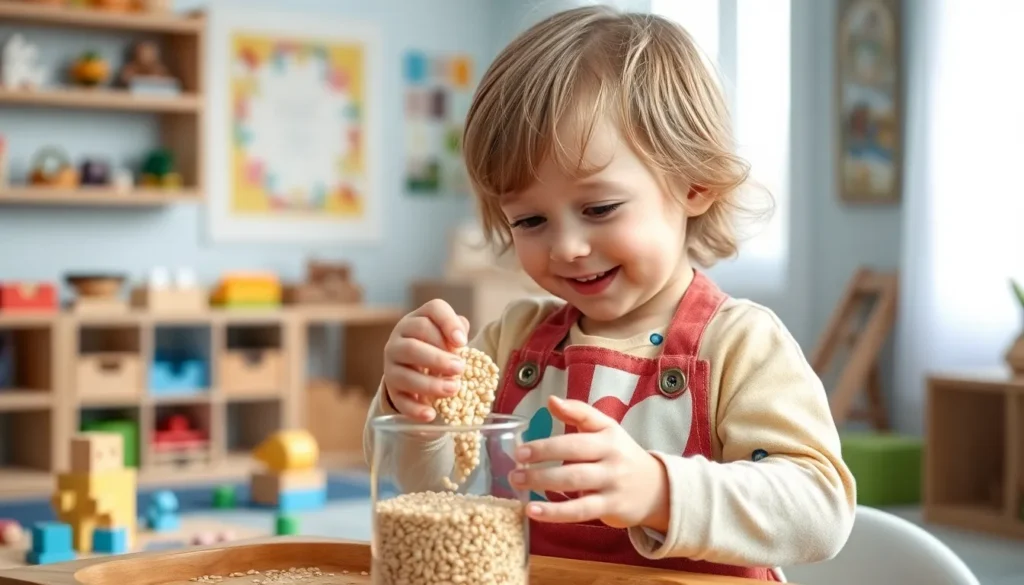
ToggleIn a world buzzing with screens and distractions, Montessori activities offer a refreshing escape into hands-on learning. These engaging tasks not only spark children’s curiosity but also nurture their independence and creativity. Imagine a child lost in the joy of pouring grains or building a tower—it’s like watching a tiny architect at work, complete with hard hats and blueprints!
Overview of Montessori Activities
Montessori activities promote active engagement and self-directed learning among children. Hands-on tasks, such as pouring or sorting materials, allow kids to explore concepts through their senses. Learning occurs in a prepared environment that encourages exploration and experimentation.
Children develop essential skills through practical activities. Fine motor skills improve when they engage in tasks like transferring objects or manipulating tools. Language skills enhance through activities that involve storytelling and vocabulary-building games.
Social interactions play a crucial role in Montessori learning. Collaborative projects, such as gardening or group art, foster teamwork and communication. Children also learn to respect each other’s space and ideas.
The curriculum emphasizes independence and concentration. Children choose their activities based on personal interests, cultivating motivation and focus. This approach nurtures self-discipline, as they learn to manage their time and efforts effectively.
Montessori materials are designed to be multi-sensory and self-correcting. Brightly colored objects attract attention and invite exploration. These materials range from puzzles to practical life tools, ensuring that learning feels like play.
Additionally, outdoor activities enhance physical development. Nature walks, gardening, and playing games outside connect children to their environment. Real-world experiences deepen knowledge and inspire curiosity.
Montessori activities also adapt to various age groups, supporting different developmental stages. Younger children engage in sensory exploration, while older ones tackle more complex projects. This flexibility ensures an individualized learning experience for each child.
Benefits of Montessori Activities
Montessori activities provide numerous advantages for children in a variety of developmental areas.
Cognitive Development
Cognitive skills undergo significant enhancement through hands-on Montessori activities. Children engage in problem-solving tasks that stimulate critical thinking. Manipulating materials to practice math concepts solidifies understanding and retention of knowledge. Exploration of the environment promotes scientific inquiry, encouraging children to ask questions and draw conclusions. Language development also benefits as children describe their activities and share ideas with peers. Each interaction fosters intellectual growth, laying a solid foundation for lifelong learning. These activities nurture curiosity and promote self-directed exploration, ultimately strengthening cognitive abilities.
Social Skills Enhancement
Social skills flourish within the Montessori framework. Children participate in collaborative activities that require teamwork and communication. Engaging in group tasks allows them to practice negotiation and conflict resolution. They learn to respect others’ opinions while sharing their own. Independent choices in activities help them understand responsibility for their actions. Interaction with diverse peers promotes inclusivity and empathy, essential skills in today’s interconnected world. Creating a community atmosphere encourages building relationships, enhancing social development throughout the learning process. In essence, Montessori activities cultivate essential skills for effective interpersonal connections.
Types of Montessori Activities
Montessori activities encompass a variety of tasks designed to enhance children’s development through exploration and engagement.
Practical Life Activities
Practical life activities focus on daily skills that foster independence. Children engage in tasks like pouring, sweeping, and buttoning to improve fine motor skills. These activities also promote concentration and self-discipline as children learn to complete each task. Mastery of everyday skills builds confidence, preparing children for real-world scenarios. For instance, they might practice setting the table or caring for plants, providing a sense of responsibility and accomplishment.
Sensorial Activities
Sensorial activities aim to refine children’s senses and perception. Children interact with materials that engage sight, sound, touch, taste, and smell. Through tasks like sorting colors or matching textures, they enhance their observational skills and discrimination abilities. These experiences encourage critical thinking as children describe their findings. Engaging with sensorial materials serves as a foundation for future academic concepts, such as geometry and nature studies.
Language Activities
Language activities cultivate communication skills and literacy. Through storytelling, rhymes, and matching objects to words, children build vocabulary and comprehension abilities. Engaging in conversations with peers fosters social interaction and conversational skills. Activities like letter tracing and phonetic games promote writing and reading readiness. The richness of language activities allows children to express themselves effectively and creatively, enhancing their overall language development.
Mathematical Activities
Mathematical activities introduce foundational math concepts in a concrete way. Children use manipulatives like beads and counters to understand numbers, addition, and subtraction. Engaging in tasks such as pattern-making and sequencing enhances logical thinking skills. Through exploration, children develop problem-solving abilities and confidence in their mathematical understanding. This hands-on approach makes abstract concepts tangible and fosters a love for learning.
How to Implement Montessori Activities at Home
Creating an engaging home environment sets the foundation for successful Montessori activities. Start by selecting a designated area that encourages exploration and independence. This space should be organized, child-friendly, and stocked with appropriate materials.
Choose practical life activities that foster everyday skills. Activities like pouring, sorting, and cleaning build independence and confidence. Provide tools such as small pitchers, cloths, or wooden toys to facilitate hands-on tasks. Children gain a sense of accomplishment through these meaningful experiences.
Incorporate sensorial activities that refine the senses. Items like textured fabrics, scented jars, or color-matching games stimulate exploration and observation. Encouraging children to use their senses promotes cognitive development and critical thinking skills.
Language activities play a pivotal role in enhancing communication skills. Offering books, flashcards, or storytelling materials supports vocabulary development. Engaging children in conversation or reading together nurtures a love for language and comprehension.
Develop mathematical activities through hands-on manipulatives. Use counting beads, measuring cups, or puzzles to introduce foundational concepts. Children grasp mathematical ideas more effectively when they can physically manipulate materials.
Foster collaboration through group activities. Invite siblings or friends to join in various projects, promoting teamwork and social skills. Such interactions help children practice negotiation and conflict resolution in a supportive environment.
Adapt activities to suit the child’s age and interests. Observing their preferences allows for a more personalized experience. Adjusting the difficulty level of tasks keeps them challenged yet engaged, reinforcing motivation and curiosity.
Regularly rotate materials to maintain interest. Introducing new challenges encourages exploration and prevents boredom. Variety in activities further supports ongoing development and lifelong learning.