Table of Contents
ToggleIn a world where toddlers seem to have endless energy and a knack for turning living rooms into mini disaster zones, the Montessori method offers a refreshing approach to early childhood education. Imagine a learning environment where kids can explore, create, and even make a mess—without the judgmental glare of a parent. Montessori isn’t just a fancy word; it’s a lifestyle that empowers little ones to take charge of their own learning.
With its focus on hands-on activities and real-life experiences, Montessori nurtures independence and curiosity. It’s like giving toddlers a magic wand that transforms everyday moments into valuable lessons. So, if you’re ready to turn your tiny tornado into a self-sufficient superstar, dive into the world of Montessori and watch as they flourish in ways you never thought possible. Who knew learning could be this much fun?
Understanding Montessori Toddler Education
Montessori toddler education focuses on the developmental needs of young children. This approach encourages self-directed learning, allowing toddlers to explore their interests at their own pace. Real-world experiences shape a child’s understanding of their environment, making learning meaningful and relevant.
Materials used in Montessori classrooms are specifically designed for little hands. These tools promote engagement and help refine motor skills. Children can manipulate objects, enhancing both cognitive and physical development.
Learning occurs in mixed-age groups, fostering collaboration and social skills. Younger toddlers observe their older peers, which inspires them to try new activities. This setting supports natural curiosity and encourages cooperative play.
Teachers play a vital role in Montessori education as guides rather than traditional instructors. They create an inviting environment and provide individualized support. By observing children, teachers assess interests and offer appropriate materials to stimulate growth.
Independence stands at the core of the Montessori philosophy. Children make choices, develop problem-solving skills, and build confidence through their experiences. This empowerment shapes a love for learning that lasts a lifetime.
Parent involvement enhances the educational experience. Families can adopt Montessori principles at home by providing opportunities for exploration and decision-making. Daily routines become learning moments, reinforcing skills in practical ways.
Overall, Montessori toddler education nurtures a child’s innate curiosity while laying a foundation for lifelong learning. By embracing hands-on activities and real-life experiences, toddlers thrive and enjoy their educational journeys.
Key Principles of Montessori Method
Montessori education emphasizes core principles that support the development of toddlers. These principles nurture independence, creativity, and a love for learning.
Child-Centered Learning
Child-centered learning stands at the heart of the Montessori philosophy. This approach prioritizes individual interests and developmental stages of each child. Teachers observe and assess children’s needs, allowing them to tailor the learning experience effectively. Each toddler engages with materials that captivate their curiosity, promoting intrinsic motivation. Learning spaces encourage free movement and exploration, enabling children to choose activities that resonate with them. Independence flourishes as toddlers take ownership of their learning journeys, leading to stronger problem-solving skills and self-confidence.
Hands-On Activities
Hands-on activities play a vital role in the Montessori method. These activities engage toddlers in real-world experiences that deepen their understanding of concepts. Carefully designed materials allow children to explore various subjects through tactile interaction. Each task fosters fine motor skills and cognitive development as toddlers manipulate objects and solve problems. Practical life exercises teach essential daily skills while enhancing focus and discipline. Toddlers benefit from these immersive experiences, as they develop critical thinking and creativity, paving the way for lifelong learning.
Benefits of Montessori for Toddlers
The Montessori method offers significant advantages for toddlers, supporting their growth and development. This approach prioritizes independence, social skills, and emotional well-being, all crucial for early learners.
Development of Independence
Montessori education fosters independence in toddlers, allowing them to make choices and decisions. Children engage in activities that promote autonomy, such as selecting their own materials and directing their own learning. This self-directed approach builds confidence, as toddlers learn to trust their abilities. Skills like problem-solving emerge naturally during play, encouraging critical thinking. Furthermore, practical life exercises, such as pouring or dressing themselves, refine motor skills while instilling responsibility. The environment nurtures self-sufficiency, empowering children to navigate their surroundings effectively.
Enhanced Social Skills
Social skills develop through the Montessori approach in a unique, collaborative setting. Toddlers interact with peers of varying ages, learning from each other through observation and participation. This mixed-age dynamic fosters empathy, as children practice sharing, taking turns, and communicating effectively. Guided by teachers, they engage in group activities that enhance cooperation. Conflict resolution skills strengthen as children learn to negotiate and express their feelings. Overall, the Montessori method cultivates a strong sense of community, enabling toddlers to form meaningful connections with others.
Implementing Montessori at Home
Implementing the Montessori method at home involves creating an environment that encourages exploration and independence. Parents can take simple steps to foster a supportive setting.
Creating a Prepared Environment
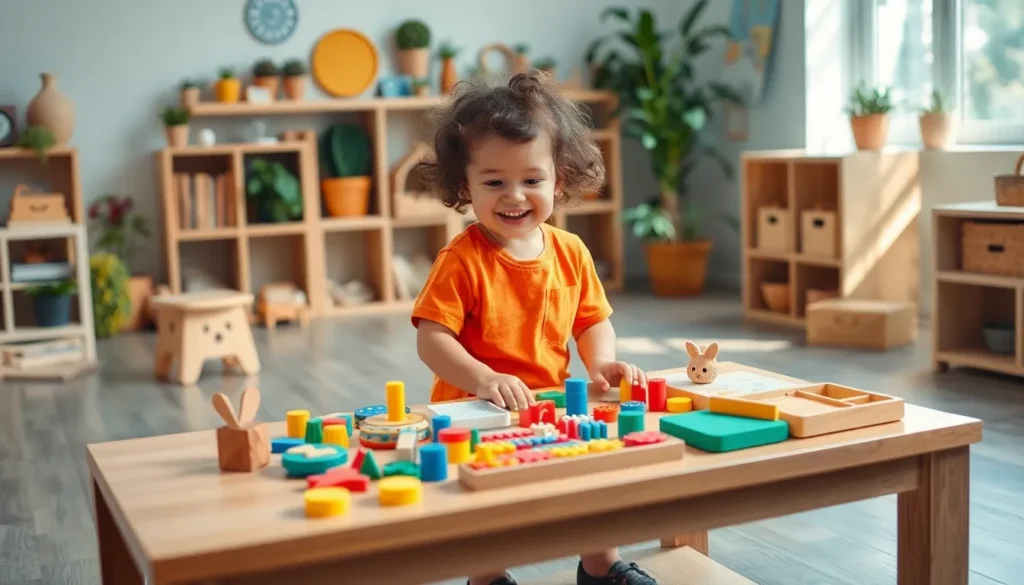
A prepared environment nurtures curiosity and independence. Arrange spaces for play and learning, allowing toddlers to freely access materials. Incorporating low shelves with various activities promotes autonomy, as little ones can choose what interests them. Designate specific areas for different types of learning, such as art, practical life skills, and sensory exploration. Ensure safety by choosing child-friendly furniture and materials, minimizing potential hazards. Maintaining an organized space cultivates focus and discipline, allowing children to engage deeply with their activities.
Choosing Montessori Materials
Selecting the right Montessori materials is crucial for a rich learning experience. Choose age-appropriate items that encourage exploration and skill development. Opt for sensory-rich materials, such as wooden blocks, shape sorters, and puzzles, that promote fine motor skills and cognitive growth. Include practical life tools, like child-sized kitchen utensils or gardening equipment, to facilitate real-life applications. Avoid standard toys that do not stimulate creativity or engage attention. Prioritize open-ended materials that allow toddlers to explore multiple outcomes, fostering problem-solving abilities and imaginative play.
Embracing the Montessori method for toddlers offers a transformative approach to early education. This child-centered philosophy not only nurtures independence but also fosters creativity and critical thinking. By allowing children to explore their interests at their own pace, they develop essential skills that will benefit them throughout their lives.
Creating a prepared environment at home can further enhance this learning experience. Parents can support their toddlers’ growth by selecting engaging materials that stimulate curiosity and promote hands-on learning. The benefits of this approach extend beyond academics, nurturing emotional well-being and social skills in young children. Adopting Montessori principles can lead to a joyful and enriching educational journey for both parents and toddlers.