Table of Contents
ToggleIn the annals of history, few figures have sparked as much debate and curiosity as Ayatollah Khomeini. As the leader of the Iranian Revolution, his influence shaped an entire nation. But what really happened in those final moments of his life? Was it a simple case of old age catching up, or was there more to the story?
Exploring the cause of Khomeini’s death isn’t just a stroll down memory lane; it’s a dive into a complex tapestry of politics, health, and legacy. From rumors of mysterious ailments to the impact of his leadership, the truth is as layered as a Persian carpet. Buckle up, because unraveling the mystery behind Khomeini’s demise might just lead to some surprising revelations.
Overview of Ayatollah Khomeini
Ayatollah Khomeini emerged as a pivotal figure in Iran during the 20th century. He founded the Islamic Republic of Iran and served as its Supreme Leader from 1979 until his death in 1989. Khomeini’s influence stemmed from his opposition to the Shah’s regime, which he criticized for its secularism and Westernization.
His religious background defined his political ideology. Khomeini was deeply involved in Islamic scholarship, holding significant authority within Shia Islam. His interpretations of Islamic governance shaped Iran’s political landscape, leading to the establishment of a theocratic state.
During the Iranian Revolution, Khomeini mobilized millions, uniting various political factions against the Shah. His leadership played a crucial role in the 1979 uprising, which ultimately resulted in the ousting of the monarchy. Khomeini’s return from exile marked a significant turning point, solidifying his position as the national leader.
Health issues began to affect Khomeini in the 1980s. He struggled with various ailments, including heart problems, which rapidly deteriorated in the latter part of the decade. As Khomeini’s health declined, speculation regarding his potential successors intensified, reflecting the turbulent political environment.
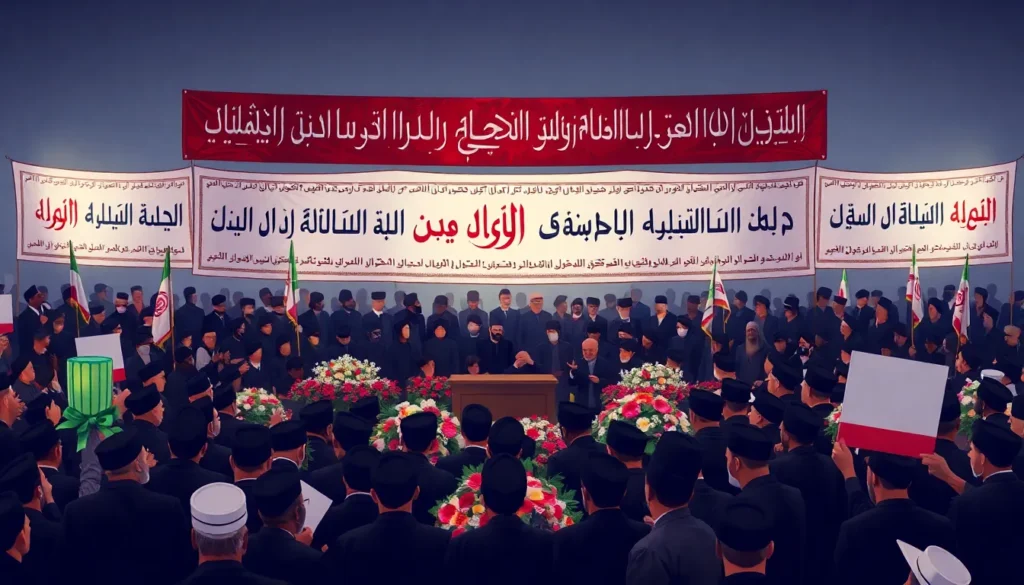
Khomeini’s death occurred on June 3, 1989. Age-related factors contributed, although the political climate surrounding his demise fueled ongoing debates. His passing prompted national mourning and concern over the stability of the newly established regime. Legacy discussions continue, as his decisions remain central to Iran’s identity and political structure.
Background of Ayatollah Khomeini
Ayatollah Khomeini holds a significant place in Iran’s history as the leader of the Iranian Revolution and the nation’s first Supreme Leader. His life and actions continue to shape the political landscape in Iran.
Early Life and Education
Born on September 24, 1902, in Khomein, Iran, Khomeini grew up in a religious family. He started his formal education at a young age, studying traditional Islamic texts and philosophy. His passion for learning led him to the city of Najaf, where he gained advanced knowledge in theology and jurisprudence. Influences from prominent scholars during this period shaped his religious ideologies. By the time he returned to Iran, Khomeini had established a reputation as an Islamic scholar, preparing him for future political engagement.
Political Involvement
Khomeini’s political involvement began in the 1940s when he openly criticized the Shah’s regime. He opposed the Shah’s secular policies, which he believed undermined Islamic values. His vocal stance against Western influence resonated with various segments of Iranian society, galvanizing support for his cause. In 1963, Khomeini faced imprisonment due to his protests, yet this only heightened his popularity. His writings and speeches during exile further solidified his role as a leader of the revolution. Ultimately, Khomeini became a unifying figure during the 1979 Revolution, successfully leading efforts to overthrow the monarchy and establishing the Islamic Republic of Iran.
Circumstances Surrounding His Death
Questions regarding Ayatollah Khomeini’s death blend personal health issues with a politically charged backdrop. Understanding the context requires examining specific events leading up to his passing.
Timeline of Events
Khomeini’s health began to deteriorate in the early 1980s, with noticeable heart problems surfacing. In 1986, he underwent surgery to address these concerns, but reports indicated complications persisted. By 1989, Khomeini’s condition worsened, raising alarms among his advisors and the public. On June 3, 1989, at 87 years old, he ultimately succumbed to heart failure. His death came amid mounting speculation regarding succession and political stability within Iran.
Final Days
In his final days, Khomeini’s health significantly declined, leading to limited public appearances. Conversations regarding his condition intensified, with frequent briefings to senior officials about his status. Visitors, including political figures and family members, reported his growing weakness and inability to engage in discussions. Despite health challenges, Khomeini maintained his influence over the political landscape through intermittent communications. The nation awaited updates with bated breath, reflective of his pivotal role in Iranian society. His passing ultimately triggered widespread mourning, underscoring the deep impact he had on Iran’s revolutionary movement.
Investigating the Cause of Death
Ayatollah Khomeini’s death remains a topic of intense scrutiny, with many questions surrounding the factors contributing to his demise.
Medical Examinations
Medical examinations conducted on Khomeini revealed serious heart complications. Following surgery in 1986, doctors anticipated improvements, but his condition continued to decline. Symptoms of heart failure emerged several years later, indicating a worsening health status. By the time of his death, Khomeini’s medical history included several heart ailments and related issues. The impact of these medical evaluations highlighted how precarious Khomeini’s health had become in the months leading up to June 1989. Medical professionals characterized his situation as critical, leading to significant concern among his advisers and the public.
Controversies and Conspiracy Theories
Controversies surrounding Khomeini’s death fueled numerous conspiracy theories. Some factions claimed that external forces played a role in his passing. Speculation ranged from political maneuvering by rival leaders to allegations of intentional neglect by his close associates. Events leading up to his death included heightened tensions within the Islamic Republic, where power struggles intensified among various factions. Discontent grew, prompting many to question the official narrative surrounding his health and demise. In the wake of his passing, various groups sought to exploit these theories to advance their agendas, illustrating the ongoing complexities of Iranian political dynamics.
Impact of His Death
Khomeini’s death marked a significant turning point in Iran’s political landscape. The immediate political ramifications became evident with a power vacuum emerging within the Islamic Republic. Various factions vying for control intensified, leading to increased tensions among his inner circle. Political instability loomed large as different groups attempted to assert their influence. The clerical establishment faced challenges in maintaining unity, as disagreements arose about Khomeini’s successor. His passing highlighted the delicate balance of power, with potential threats to the theocratic regime surfacing. As a result, Khomeini’s death significantly altered the dynamics of Iranian politics, prompting a reevaluation of policies and governance.
Khomeini’s legacy transcended his lifetime, leaving a profound impact on Iran and the broader Islamic world. Fervent devotion characterized his followers, who continued to honor his principles and teachings. Establishing religious authority, his ideas reshaped the concept of governance in Iran, intertwining politics with Islamic law. Commemorative events arose, with annual gatherings reflecting on his contributions and revolutionary spirit. National identity intertwined with Khomeini’s memory, influencing how Iran positioned itself regionally and internationally. Propagating his ideologies, the government utilized state narratives to ensure his role remained significant within Iranian society. Ultimately, Khomeini’s legacy persists, shaping Iran’s political and cultural identity for generations.
Ayatollah Khomeini’s death left an indelible mark on Iran and its political landscape. While his health issues were documented, the circumstances surrounding his passing continue to spark debate. Speculations about external influences and internal power struggles highlight the complexities of his legacy.
His leadership during the Iranian Revolution and the establishment of the Islamic Republic transformed Iran’s identity, intertwining politics with religious governance. Khomeini’s influence persists, shaping discussions on national identity and state narratives. As Iran navigates its future, the implications of his life and death remain a focal point in understanding the ongoing evolution of its political dynamics.