Table of Contents
ToggleIn a world where kids are glued to screens, Montessori sensory activities offer a refreshing escape into hands-on learning. These engaging activities not only spark creativity but also help little ones develop crucial skills while having a blast. Imagine your child exploring textures, sounds, and scents that make learning feel like an adventure rather than a chore. Who knew education could be this fun?
Montessori sensory activities transform ordinary playtime into extraordinary experiences. They encourage children to use their senses, turning everyday objects into tools for exploration. So, if you’re ready to swap out the endless scrolling for some serious sensory fun, buckle up! It’s time to dive into a world where learning is as exciting as a treasure hunt, and every touch, taste, and sound opens up a new door to discovery.
Overview of Montessori Sensory Activities
Montessori sensory activities focus on hands-on learning experiences designed for children. These activities support the development of essential skills like fine motor coordination, concentration, and creative problem-solving. Engaging with a variety of textures, sounds, and scents, children explore the world around them in meaningful ways.
Activities often include practical exercises, where children manipulate objects that enhance sensory awareness. For instance, pouring water, sorting objects by size or color, and feeling different fabrics encourage tactile exploration. Through these experiences, children build cognitive connections while having fun.
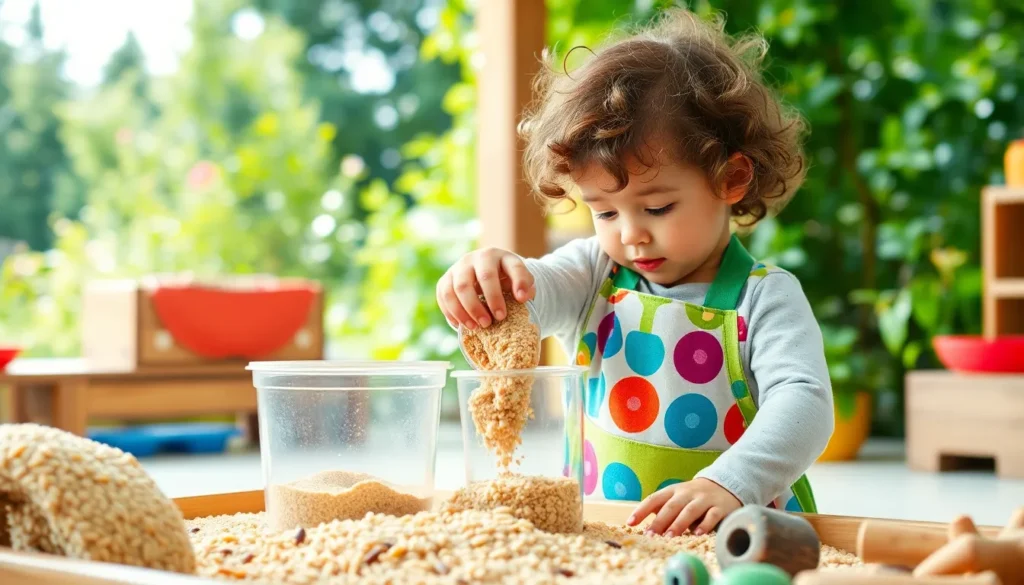
In addition, sensory bins filled with materials like rice, beans, or sand provide opportunities for free play and exploration. These setups promote open-ended discovery, allowing children to experiment without limitations. When children engage in these activities, they develop not only their sensory skills but also their creativity.
Music and sound-related activities also play a crucial role. Instruments, sound games, or nature walks enhance auditory skills and encourage listening. Such experiences foster appreciation for rhythm and sound, enriching children’s understanding of their environment.
Overall, Montessori sensory activities serve as an effective alternative to passive screen time. Parents encourage involvement in these activities, supporting their children’s growth and exploration. Embracing this hands-on approach prepares children for lifelong learning while making each moment an adventure.
Importance of Sensory Development
Sensory development plays a crucial role in early childhood. Engaging with varied senses fosters cognitive, emotional, and physical growth in children.
Key Benefits for Children
Enhanced exploration stimulates curiosity. Sensory activities provide hands-on experiences that improve fine motor skills. Developing an understanding of textures and sounds helps children communicate effectively. They gain the ability to focus and concentrate while enjoying these activities. Problem-solving skills emerge, allowing for creative thinking during play. Social interactions often increase as children collaborate with peers in sensory experiences. Overall, sensory development offers numerous pathways for holistic growth in young learners.
Role in Early Childhood Education
Educators prioritize sensory activities within Montessori environments. Engaging children through tactile, auditory, and visual experiences enriches learning. Sensory exploration promotes critical thinking and self-regulation, essential for lifelong skills. These activities allow students to embrace hands-on opportunities, making knowledge more meaningful. In addition, sensory experiences support individual learning styles. Educators design activities to meet diverse needs, ensuring inclusive learning for all children. Sensory development aligns with educational goals, preparing students for future challenges.
Types of Montessori Sensory Activities
Montessori sensory activities come in various types, each designed to stimulate a child’s senses and support their development.
Practical Life Activities
Practical life activities focus on daily tasks. Children engage in pouring water, sweeping floors, or folding cloths, enhancing fine motor skills and hand-eye coordination. Tasks like sorting and transferring objects invite children to explore different textures and weights. Completing these activities cultivates independence and responsibility too. Children learn to use tools and materials, sharpening their focus and enhancing concentration. Engaging in these activities promotes a sense of achievement and mastery, boosting confidence.
Sensorial Materials
Sensorial materials play a vital role in Montessori education. Materials like color tablets, sound boxes, and tactile boards encourage children to refine their sensory perceptions. Exploring weights and textures fosters critical thinking and problem-solving skills. Using the pink tower, for example, helps children understand concepts of size and dimension through hands-on experience. Each material is designed to isolate a sensory experience, allowing children to develop sharper observational skills. They learn through touch, sight, and sound, enhancing their overall sensory awareness.
Nature-Based Sensory Experiences
Nature-based sensory experiences offer profound learning opportunities. Engaging with natural elements like sand, water, and leaves immerses children in real-world exploration. Activities such as garden planting or nature walks invite discovery while developing an appreciation for the environment. Children can experiment with various textures, scents, and sounds, broadening their sensory experiences. Collecting and sorting natural materials enhances their understanding of the world around them. This hands-on interaction with nature fosters curiosity and connection, vital for their overall development.
How to Implement Montessori Sensory Activities at Home
Implementing Montessori sensory activities at home creates engaging and educational experiences for children. These activities can easily transform everyday spaces into opportunities for learning.
Creating a Sensory-Friendly Environment
Begin by designating specific areas in the home for sensory exploration. Design spaces that include varied textures like soft fabrics, rough surfaces, and smooth objects. Organize materials in clear bins, allowing children to access items independently. Consider adding natural elements such as plants and stones, which can stimulate curiosity. Prioritize lighting by ensuring spaces are well-lit, encouraging a comfortable atmosphere for exploration. Select calming colors for walls and furnishings that promote relaxation. Establish a routine that incorporates sensory activities, reinforcing their importance in daily life.
Tips for Engaging Activities
Incorporate everyday materials to create sensory-rich experiences. Use rice, beans, or sand for sensory bins, providing opportunities for pouring and sorting. Add simple items like spoons and cups to enhance fine motor skills during play. Explore the outdoors, collecting leaves and stones for tactile experiences that connect children with nature. Include sound jars filled with different materials to stimulate auditory senses and provoke discussions about sounds. Promote creativity with arts and crafts projects that allow for tactile exploration through paints, clay, or textured papers. Invite children to participate in cooking activities, which combine sensory experiences with practical life skills.
Montessori sensory activities offer a dynamic way for children to learn and grow through hands-on experiences. By engaging multiple senses these activities not only foster creativity but also enhance essential skills that contribute to overall development. Parents and educators can transform ordinary play into meaningful learning adventures that encourage exploration and discovery.
Incorporating these activities into daily routines enriches children’s lives and helps them build a strong foundation for future learning. Embracing the principles of Montessori education empowers children to thrive in a world filled with opportunities for growth and exploration.